Miskatonic University
The Colour Out of SpaceMiskatonic University, based in Arkham, Massachusetts, links several strands of the narrative through teaching, scientific investigation, and expeditionary research. Its professors examine the strange meteorite that begins the Gardner family’s ordeal; its faculty include Albert N. Wilmarth and Nathaniel Wingate Peaslee; and it later backs Peaslee’s expedition to Australia. The university’s importance lies not in any described campus or building, but in the work carried out under its name—and in the persistent gap between scholarly procedure and phenomena that resist explanation.
Academic Setting and Scientific Inquiry
In June 1882, three professors from Miskatonic University hurried to the Nahum Gardner farm after a meteorite fell beside its well. They examined the brownish mass near the torn earth and charred grass. Though Nahum Gardner had reported that the stone had seemed larger before, the professors initially answered that stones do not shrink. Its lingering heat and unusual softness soon complicated that confidence: a geologist’s hammer gouged the material rather than chipping it, and even a small sample remained hot enough to burn the bottom of the old pail in which they carried it.
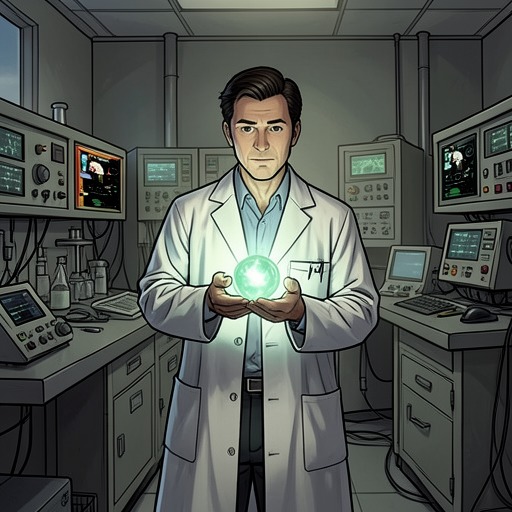
The professors took the specimen back to the university for testing. When they returned the next day, they told Ammi Pierce that it had disappeared in a glass beaker, which had vanished with it. Their laboratory observations had offered no ordinary explanation. Heating produced no occluded gases; tests with charcoal and a borax bead yielded no expected response; and the material resisted volatilization even at the temperature of an oxy-hydrogen blowpipe. It was malleable on an anvil and strongly luminous in darkness. Under the spectroscope, it showed shining bands unlike the known colours of the normal spectrum. The investigators considered new elements and unusual optical properties, but the tests did not make the substance intelligible.
Chemical reagents likewise failed to account for it. Water and hydrochloric acid had no effect, while nitric acid and aqua regia hissed and spattered against its heat. Ammonia, caustic soda, alcohol, ether, carbon disulphide, and other solvents did not appear to attack it, even as its weight steadily decreased. It was magnetic, and faint Widmannstätten figures appeared after immersion in acid solvents. The university laboratory thus supplies an important contrast: its procedures are precise and its observations detailed, yet the specimen’s fading and disappearance outrun the categories those procedures can establish.
Faculty, Teaching, and Personal History
The university is also the workplace through which individual experiences are framed as academic and public matters. After the Vermont floods of November 3, 1927, Wilmarth was an instructor of literature at Miskatonic University and an enthusiastic student of New England folklore. Reports of strange objects in flooded rivers reached him through newspaper cuttings and a letter relayed from Hardwick, Vermont. Friends asked him to interpret the stories; he initially treated them as rustic superstition, while some educated acquaintances suspected that distorted facts might lie beneath the reports. His position connects the university’s learned culture to the folklore that its methods are asked to assess.
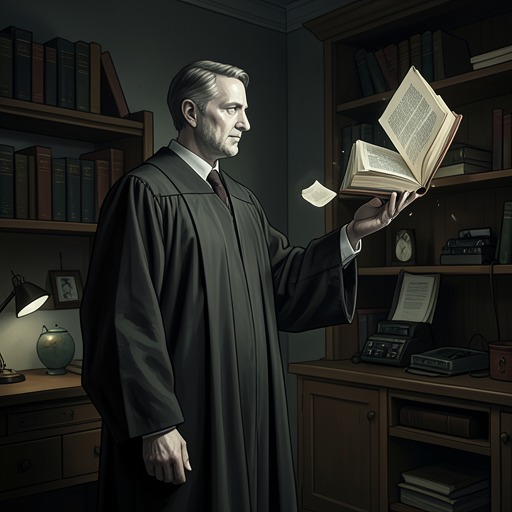
Peaslee’s history makes the faculty affiliation more personal and more fragile. After his return to ordinary life, the college kindly offered him his former professorship. He settled with his son Wingate in the Crane Street house and resumed teaching in February 1914, attempting to re-enter a profession from which more than five years of his life had been lost. He taught for a year, but his recovery did not restore his former energy: dreams and strange ideas persisted, and his sense of the relation between consecutive and simultaneous time remained disturbed. The university could restore his position, but that institutional welcome could not undo the consequences of his amnesia.
Wingate, the son who had remained loyal through his father’s altered state, later became a professor of psychology at Miskatonic. Peaslee entrusted him with the written account of a later experience because he believed Wingate knew the inner facts of his case and was least likely to dismiss the revelation. The university therefore joins professional and familial forms of understanding: it is where father and son hold academic positions, while Wingate is also the chosen recipient of a testimony Peaslee does not want to deliver orally.
Research Beyond Arkham
Miskatonic University’s role expands from investigation and teaching to organized field research. It backed Peaslee’s 1935 Australian expedition, whose purpose was publicly described cautiously because the search for reported ruins risked sensational or jocular treatment in the cheaper newspapers. The university’s support helped make the journey possible, while its participants included Peaslee, his son Wingate, and William Dyer, a geology professor who had led the Miskatonic Antarctic Expedition of 1930–31. Ferdinand C. Ashley of ancient history and Tyler M. Freeborn of anthropology also joined the party.
The expedition’s preparation reflects a deliberate scientific ideal. Robert B. F. Mackenzie, who came to Arkham early in 1935 to assist, arranged tractors at Pilbarra and helped secure a light-draught tramp steamer for the river journey. The party intended to excavate carefully, sift the sand, and leave undisturbed anything that seemed to remain in its original position. It sailed from Boston on March 28, 1935, and, after crossing the Atlantic and Mediterranean and passing through the Suez Canal, the Red Sea, and the Indian Ocean, reached Western Australia. On May 31, the party forded a branch of the De Grey River and entered the desolate region associated with the ancient ruins.
Peaslee’s fear grew as the expedition approached its destination, intensified by dreams and pseudo-memories that had continued to trouble him. The university-sponsored project therefore carries forward the same tension established by the meteorite tests: methodical inquiry advances into territory where the investigators’ evidence and experience may not coincide. Miskatonic University supplies the staff, professional disciplines, and practical backing for such investigations, but the accounts repeatedly show that institutional learning does not guarantee mastery of what those investigations uncover.